SS #48: Someone Stole My Socrates
This episode, Brandy and Mystie discuss the Socratic Method. Is it really classical? Is it progressive? Does it have anything to do with Socrates? Has he been kidnapped and, if so, it is right to hunt him down and steal him back?? This conversation was great fun for us. We think you’ll enjoy it, too!
Socratic Dialogue
Today’s Hosts

Brandy Vencel

Mystie Winckler
Scholé Every Day: What We’re Reading


Socratic method or Socratic seminars?
We keep running into the same problem: terms with classical roots get used for practices built on a modern philosophy that rejects classical assumptions. “Socratic method” is one of the clearest examples.
A listener pointed out a claim circulating in a homeschool forum: the Socratic method is progressive education and has been proven ineffective. That’s a big claim, and it forces the real question: what do people mean when they say “Socratic method”?
When “Socratic” means “get everyone talking”
If you go looking online, what you often find is “Socratic seminars”: collaborative dialogue facilitated by open-ended questions about a text. The goal reads like this: students listen, think for themselves, articulate responses, and cooperate civilly. That skill set isn’t worthless, but it’s not automatically “Socratic” in the historical sense.
In practice, this version often treats participation as the proof of learning: discussion for the sake of discussion. It tends to slide toward:
- equal voices as equal authority
- opinions treated as inherently valuable
- “truth” located inside the learner and “discovered” by expression
That framework aligns easily with progressive assumptions. It’s also why certain “Socratic” resources set off alarms: language about active learning, meeting standards, and the posture that the teacher must be “less controlling over outcomes,” “more open-minded,” and primarily a listener.
If the educational philosophy underneath is relativism—truth is unknowable, or truth is personal—then questioning becomes a tool to help students generate meaning rather than submit to reality.
We don’t let progressives define our words
Classical education can’t be a reaction project. If we dump a term just because someone else misuses it, we become reactive and let them set the agenda.
So we do what classical educators do: return to the source. Socratic dialogue means looking at what Socrates was actually doing and how that practice has been used in the classical tradition.
What real Socratic questioning is for
A key distinction surfaced in the older classical-school writing we reviewed: Socrates wasn’t asking questions because he didn’t believe in anything. He questioned because he believed truth is knowable, and he used questions as a disciplined strategy to move from error toward truth.
That purpose changes everything.
In real Socratic method, the teacher isn’t just “facilitating.” The teacher is leading—not by lecturing constantly, but by aiming questions at the student’s assumptions.
The first movement is not “share your thoughts.” The first movement is:
- expose contradictions and weak definitions
- press for clarity and exactitude
- bring the student to the honest admission: “I don’t know.”
That moment matters because it creates the posture needed for learning. The goal isn’t self-expression. The goal is repentance of mind—a turn away from false confidence and toward reality.
From there, inquiry can become fruitful: questions now flow from a student who knows he needs something outside himself—truth.
Why definitions are the hinge
This whole confusion exists because we no longer share definitions. In our age, the same words can mean opposite things. That’s why a conversation can feel friendly and still go nowhere: we assume agreement because we share vocabulary, but we don’t share meaning.
Classical education doesn’t treat definitions as pedantry. Definitions are how we keep inquiry anchored to truth rather than drifting into opinion-swapping.
So if someone says “Socratic method,” we have to ask:
- What do you mean by that?
- What is the underlying view of truth?
- What is the end of the questioning?
Socratic method is not a philosophy
Another confusion we’ve seen is treating “Socratic method” as if it equals “classical education.” It doesn’t. It’s a practice inside a broader philosophy. And practices can be borrowed and repurposed.
A progressive program can use “questioning” and slap a bust of Socrates on the page. That doesn’t make it classical. Likewise, a classical educator can use plenty of questioning that isn’t strictly Socratic. Not every good discussion is a Socratic one.
The difference is not “questions vs. no questions.”
The difference is direction:
- Progressive questioning tends toward self-generated meaning.
- Socratic questioning aims at objective truth, and it doesn’t flatter the student’s first impressions.
Authority, texts, and the teacher’s job
Socratic teaching assumes authority exists—and that both teacher and student stand under it.
In the classroom, that authority is often mediated through the text: the canon, the source material. The teacher’s role is to keep the text central, demand accuracy, and hold students responsible for what they say.
That responsibility piece is crucial. Socratic method insists:
- “Where is that in the text?”
- “What do you mean by that word?”
- “How do you know?”
- “Does your claim match the evidence?”
We can’t treat uninformed opinion as sacred. If we do, we train students to speak confidently without accountability—exactly the opposite of intellectual virtue.
This is more doable than it sounds
Real Socratic method is not a mystical elite technique reserved for institutions. At the simplest level, it’s what we do whenever we refuse to let a vague answer stand.
It can look like:
- taking a student’s statement and asking for the source
- backing up to definitions
- tracing implications
- forcing clarity
- guiding them toward “I don’t know yet, but I want to”
That’s not progressive. That’s classical—because it assumes truth is real, outside us, and worth submitting to.
And if a piece of “classical” writing leaves us feeling like classical homeschooling is impossible, that’s a prompt to ask a blunt question: is this actually classical—or is it a distortion that shifts authority away from reality and toward personality, platform, or performance?
Mentioned in the Episode
Listen to related episodes:
SS #128 – Division or Dialogue? (with Pastor Chad Vegas!!)
SS #69: Socratic Trialogue (with Renee Shepard!)
SS #50: A Little Less Talk and a Lot More Action (with Abby Wahl!)

SS #47: Rightly Dividing (with Karen Glass!!)
Be a part of the conversation!
Discuss this podcast with other moms inside Sistership.
Podcast: Play in new window | Download
What resource would you recommend to understand the true Socratic method?
Plato
Having read Joshua Gibbs’ article, I think you took his words a little too literally. He writes literary articles that are not supposed to be read in the same way as one reads Charlotte Mason.
Okay, major props for quoting “So I Married an Axe Murderer”. As a teenager of the 90s, this is still one of my favorite movies. It was pre-Austin Powers Mike Meyers at his comedic best.
Small point of clarification, the quote from Charlie’s Scottish Mom is, “That’s a fact!” They’re quibbling over whether her tabloid (which she calls “the paper”) is real news or not. Charlie says, “Mom, a ‘paper’ contains facts.” Mom says, “This paper contains facts. Pregnant man gives birth, that’s a fact!” It’s such a fantastic scene.
Ok, it’s admittedly a little over the top that I can quote that scene from memory but now I will not be able to read Wikipedia without hearing “That’s a fact!” in a Scottish accent again. Sincere thanks for that, Brandy. 🙂
Hahahaha! I love that you have such an accurate memory of that scene! One of my roommates in college had the DVD and we watched it regularly. I was just telling my husband that I need to watch it again — it’s been too long.
You will love this — to this day, when one of the children stands between my husband and the screen during a football game, he yells “HEED!” And then mumbles, “It’s got its own weather system,” in his best attempt at a Scottish accent.
It was a fun rabbit trail, though, hm? I certainly didn’t realize how many organizations were grabbing classical terminology and emptying it of its meaning!
Oh I love it! It’s such an underrated movie. (And so very quotable.)
Considering that CiRCE published a response to his article and our response was in line with what Zimmerman both corrected and commended, I think we’re safe. 🙂
Yup. You can start with Kern’s article linked above, which also links to Wikipedia, but the best source is the original – seeing how those dialogues actually worked to provoke thought, wonder, and learning.
Ladies, I loved this episode so much! It always inspires me to hear “regular homeschool moms” doing such deep thinking. Drawing the distinction between true and false Socratic questioning was super helpful. Thanks!
Ah! I’m so glad you enjoyed it! ♥
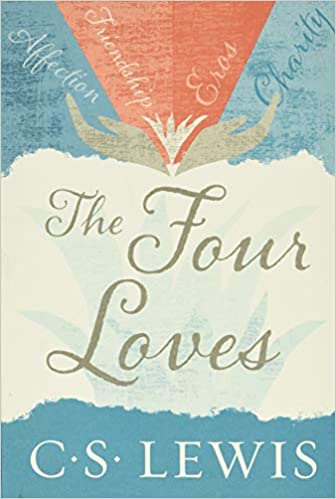
Just an FYI for other people who don’t have audible…I found the C.S. Lewis Four Loves recording on my library’s free hoopla app. 🙂
Okay, I do appreciate the “read Plato to understand the Socratic Method” idea … but I am also one of those people realizing how much I *don’t* know about Classical Education while I try to muddle myself and my children through it. My initial reading of Meno left me flustered, I expected/hoped to be able to just *absorb* the method and the wisdom, but instead sometimes Socrates seemed condescending and I realized I’m not even sure how to read it, if that makes sense. In trying to learn to educate my children in a method I was not brought up with, myself, I feel like I am floundering. And with “Socratic” applied to so many terms (dialog, questions, method, duos, circles, discussions) I start to think I am barely treading water trying to swim with the big kids.
Ha. I think Socrates seems condescending sometimes, too!
You aren’t the only one who raised this sort of question, Kim, and shortly after the episode, we found a homeschool mom named Renee who has thought about this quite a bit. She gave Mystie and I a reading assignment (Gorgias) and next season we’re going to have her on the show to discuss Socratic discussion again, this time in light of a real Socratic dialog … I think it’s going to be super helpful for all of us!